

Unlocking Efficiency with Robotic Forklift Trucks
_%E7%94%BB%E6%9D%BF%201.avif)
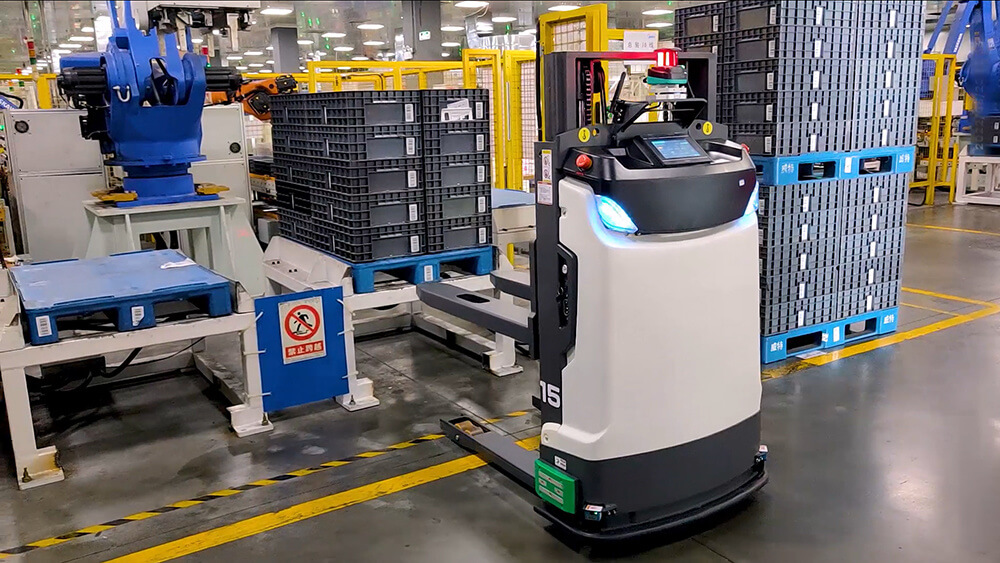
Against the backdrop of manufacturing, warehousing, logistics, and third-party logistics (3PL) continually pursuing high efficiency, low costs, and enhanced safety, robotic forklifts (also known as automated forklifts) are rapidly becoming the core equipment for internal logistics automation. The advent of robotic forklifts has fundamentally transformed material handling practices. Equipped with sensors, cameras and sophisticated software, they navigate complex environments, pick and place goods, and communicate seamlessly with other systems. By integrating advanced robotics and artificial intelligence, these machines are revolutionising warehouse operations.
How Do Robotic Forklifts Unlock Efficiency Potential?
1. Enabling Continuous Round-the-Clock Operations
The most significant advantage of robotic forklifts lies in their capacity for continuous round-the-clock operations. Capable of 24/7 uninterrupted running, they remain unaffected by shift patterns, fatigue, or staffing shortages, ensuring stable and efficient logistics system performance.
2. Precise and Stable Handling Capabilities
Utilising laser navigation, visual recognition, and high-precision positioning technologies, robotic forklifts maintain consistent operational accuracy in complex environments, significantly reducing error rates. Compared to manual operation, they minimise unnecessary travel distances and waiting times, boosting task completion efficiency by over 40%. Intelligent scheduling systems further enable multi-unit coordination, preventing congestion and resource idleness.
3. Intelligent Scheduling and Path Optimisation
Through intelligent scheduling systems, robotic forklifts dynamically adjust operational strategies based on task priority, path congestion, and real-time conditions, substantially enhancing overall logistics efficiency.
The Application Value of Robotic Forklifts Across Diverse Scenarios
Within manufacturing plants, robotic forklifts undertake high-frequency tasks such as raw material distribution, in-process goods transfer, and finished goods storage, enabling seamless integration between production lines and warehousing.
In large warehouses and distribution centres, robotic forklifts perform pallet handling, stacking, and narrow aisle operations, significantly enhancing storage space utilisation and operational throughput.
Within third-party logistics (3PL) and e-commerce fulfilment environments, robotic forklifts enable rapid deployment and flexible scalability, equipping businesses to manage order fluctuations and accommodate operational growth.
Key Advantages of Robotic Forklifts
Employing robotic forklifts within your warehouse offers numerous benefits for both your organisation and workforce. From enhanced safety to reduced operational costs, you will find that automated forklifts integrate seamlessly into existing processes while significantly boosting productivity. Below are four principal advantages of utilising robotic forklifts in the workplace.
1. Enhanced Efficiency: Robotic forklifts operate around the clock without requiring breaks, significantly boosting production efficiency and ensuring uninterrupted workflow continuity. By assigning repetitive tasks and heavy lifting to these machines, your staff can focus their efforts elsewhere, thereby elevating customer experience and generating greater revenue.
2. Enhanced Safety: Equipped with advanced sensors and artificial intelligence, these forklifts monitor their surroundings in real time to prevent collisions and ensure secure operation. By eliminating human error, workplaces become safer environments. Automated forklifts can operate alongside human workers, thereby reducing concerns for staff safety.
3. Cost Reduction: Automated material handling enables businesses to reduce labour costs and minimise errors associated with manual operations. Given the rising costs of labour and workplace injuries (including medical expenses, lost wages, or productivity losses), introducing robotic forklifts helps mitigate costly incidents. While the initial investment in robotic forklifts may seem significant, integrating automation into your operations delivers substantial returns on investment.
4. Seamless Integration: Robotic forklifts integrate with existing Warehouse Management Systems (WMS) for fluid operations and data synchronisation. Leveraging your software as a resource, robots can autonomously learn routine tasks and movements or be programmed for independent navigation within warehouses. Automation frees teams to focus on high-value activities while delegating repetitive, labour-intensive duties to forklifts and lift trucks.
5. Deep Integration with Digital Systems: Robotic forklifts transcend mere automation equipment to become pivotal nodes within digital logistics ecosystems.
Through integration with WMS, MES, ERP and other systems, robotic forklifts enable automated task dispatch, real-time data feedback and end-to-end visualised management. This propels internal logistics towards data-driven, precision-operated transformation.
Practical Applications
Leading enterprises have already benefited from robotic forklifts in their operations. Below are some case studies from our company:
AiTEN Robotics' AE15 Autonomous Forklift
In a recent project, AiTEN delivered a solution incorporating the AE15 counterbalanced stacker. This autonomous forklift interfaces with production line automation equipment, significantly enhancing internal logistics efficiency.

At a sporting goods factory, AiTEN's MP10 and AS20 autonomous forklifts were integrated into a multi-level, multi-process material handling system, thereby streamlining material transfer operations. This integration enhanced internal logistics efficiency and supported the company's industrial transformation.

These case studies demonstrate the versatility and effectiveness of robotic forklifts in improving operational efficiency across diverse industries.
まとめ
In an era where dual pressures of efficiency and cost coexist, unlocking the efficiency potential of robotic forklifts has become a crucial breakthrough for enterprises upgrading their internal logistics systems.
By deploying robotic forklifts, businesses can not only enhance current operational efficiency but also lay a solid foundation for future intelligent development.
Adopting robotic forklifts positions your enterprise at the forefront of industrial innovation. These autonomous solutions enhance efficiency, safety, and cost-effectiveness, paving the way for the future of material handling.
To discover how robotic forklifts can transform your operations, contact us today.