
How Are Robots Used in Car Manufacturing?
_%E7%94%BB%E6%9D%BF%201.avif)
In the rapidly evolving automotive industry, efficiency and adaptability are paramount. Robotics has become a cornerstone of automotive manufacturing, delivering precise and highly efficient solutions for production.
The automotive manufacturing sector exhibits a growing demand for automation. Automation assists industry professionals in achieving production targets, enhancing quality control standards, and improving workplace safety. Through a range of innovative technologies such as robotic spraying, automated welding, and palletising, the industry continues to advance.
The Role of Robotics in Automotive Manufacturing
Robotics plays a pivotal role in streamlining manufacturing processes, particularly within the automotive sector. Robotic automation optimises development, design, and production workflows by enhancing speed, precision, and repeatability.
Robotics sets industry benchmarks through its exceptional versatility across all stages of automotive manufacturing. During initial assembly phases, robotic automation swiftly and accurately executes complex tasks such as component installation, assembling intricate systems, and precision-fitting interior components.
In the critical painting process, robotic systems achieve perfectly uniform coatings while minimising overspray. This not only reduces material waste but also delivers high-quality, visually stunning surface finishes that exceed industry standards and consumer expectations.
Welding represents another domain where robotic automation delivers precision, safety and consistency. During spot welding and arc welding operations, robotic automation ensures robust and uniform connections between the vehicle chassis and bodywork. This not only enhances manufacturing process safety but also strengthens the vehicle's structural integrity, thereby safeguarding drivers and passengers.
Within material handling, robots play an indispensable role. Utilising both robots and collaborative robots (robots designed to work alongside humans), we can transport items ranging from engine blocks to complete vehicles. Depending on configuration and load capacity, robots can handle the heaviest components—chassis, engines, and body panels. Simultaneously, they execute precise movements, carefully handling the most delicate components.
The adaptability of robotic automotive automation systems enables manufacturers to integrate them into virtually every stage of vehicle production, from initial manufacturing to final assembly. Automated processes assist manufacturers in boosting output, maintaining the highest standards of quality control, and reducing hazardous and labour-intensive tasks. Simultaneously, automation ensures vehicles meet today's demanding market requirements as they roll off the production line.
Automated vehicle assembly tools enhance production efficiency, minimise waste, and guarantee the safe and efficient handling of vehicle components from start to finish.
How Professional Robots Drive Advancements in the Automotive Manufacturing Industry
For automotive manufacturers, automation delivers numerous critical advantages, making it a highly worthwhile investment. Consider the following production enhancements:
- Increased production speed and reduced lead times.
- A safer working environment by assigning hazardous tasks to robots.
- Enhanced quality control of product output through precise, repeatable processes.
- Cost savings achieved by reducing waste and optimising resources.
Emerging industry trends such as AI-driven robots, collaborative robots (cobots), and autonomous assembly lines continue to propel the sector forward along its already cutting-edge trajectory.
How AiTEN Robots Can Assist You
Within automotive manufacturing plants, logistics handling proves crucial.
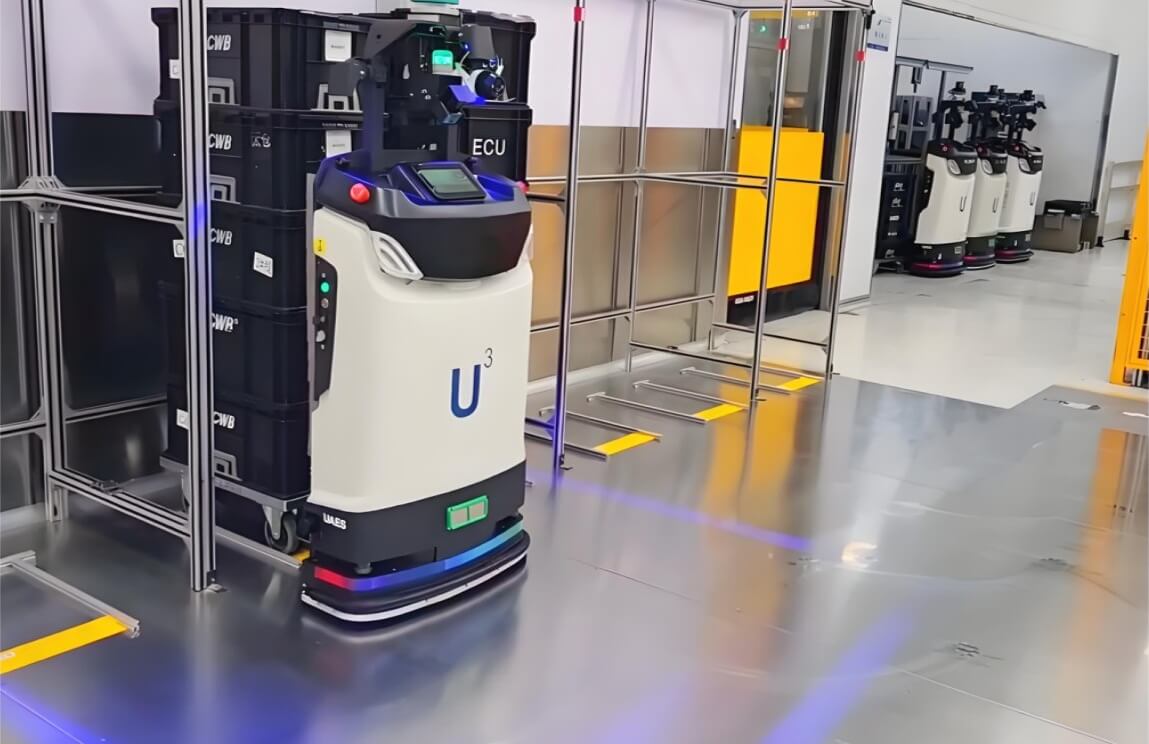
During production processes, mobile robots such as AGVs, AMRs, and unmanned forklifts are routinely deployed to transport materials to designated locations. Their capability to repeatedly move heavy loads ensures the seamless operation of assembly lines.
Beyond this, they can also be deployed to transport materials to and from loading docks, and even load goods onto trucks for dispatch.
Efficiency and safety remain paramount factors in the practical application of logistics robots. Handling heavy loads poses inherent risks to workers, whereas robots can repeatedly move such materials as required without causing injury.
AiTEN Case Studies:
- AiTEN's customised solution achieves 30% increase in warehouse utilisation for automotive factory with confusing logistics management
- Efficiency increased by 50%: AiTEN’s narrow aisle handling solution for the automotive industry
- 40% efficiency improvement: AiTEN Robotics' innovative application in an engine manufacturing company
.jpg)
Beyond the aforementioned advantages, material handling robots also enhance safety, product quality, space utilisation, and material handling efficiency. They support smarter data collection, enabling staff to focus on high-value tasks and delivering a critical competitive edge in rapidly changing markets.
The Future of Automation in Automotive Manufacturing
In the machining and assembly of precision components such as engines and gearboxes, robots similarly undertake high-precision handling, tightening and testing operations.
With the advancement of Industry 4.0 technologies, automotive manufacturing robots are evolving towards greater intelligence, enhanced collaboration and increased flexibility, thereby unlocking further industrial potential.
Future automation will focus on:
- AI-driven smart factories
- Fully autonomous intralogistics
- More flexible robotic assembly lines
總結
Robotics is fundamentally transforming how automobiles are designed, manufactured and delivered. From welding to logistics automation, robotic technology has become the core driver enabling automotive manufacturers to enhance efficiency, reduce costs and achieve intelligent manufacturing.
From assembly line robots to material handling, autonomous mobile robots (AMRs) streamline operational processes, lower expenses and boost production efficiency. Whether for welding, vehicle assembly or component transportation, these intelligent machines deployed across automotive manufacturing excel at diverse tasks.
The widespread adoption of robotics in automotive manufacturing delivers undeniable, substantial value. Indeed, without industrial robots, the modern automotive industry could not have achieved its current scale, precision, and level of intelligence.
For automotive manufacturers, accelerating the application and upgrading of robotic technology has become an imperative choice for seizing the opportunities presented by industrial transformation.
關於 AiTEN Robotics
作為一家專注於智慧物流解決方案的公司,AiTEN Robotics始終以 「智慧工廠 」為核心,將技術創新與產業需求深度融合。目前已為全球 200 多家製造業客戶提供了全方位的服務:利用全系列的物料搬運機器人產品組合,覆蓋多樣化的物料搬運情境,開發出業界等級的智慧排程系統,實現多設備之間的高效協同。通過橫跨售前規劃、部署實施到運營優化的全生命周期服務體系,賦能企業實現物流智慧化轉型,持續推動製造業的數位升級和優質發展。
您的倉庫準備好迎接這場效率革命了嗎?請立即聯絡我們,取得 AGV 智慧倉儲解決方案的專業諮詢!