
Intralogistics Automation: Improve Efficiency and Throughput
_%E7%94%BB%E6%9D%BF%201.avif)
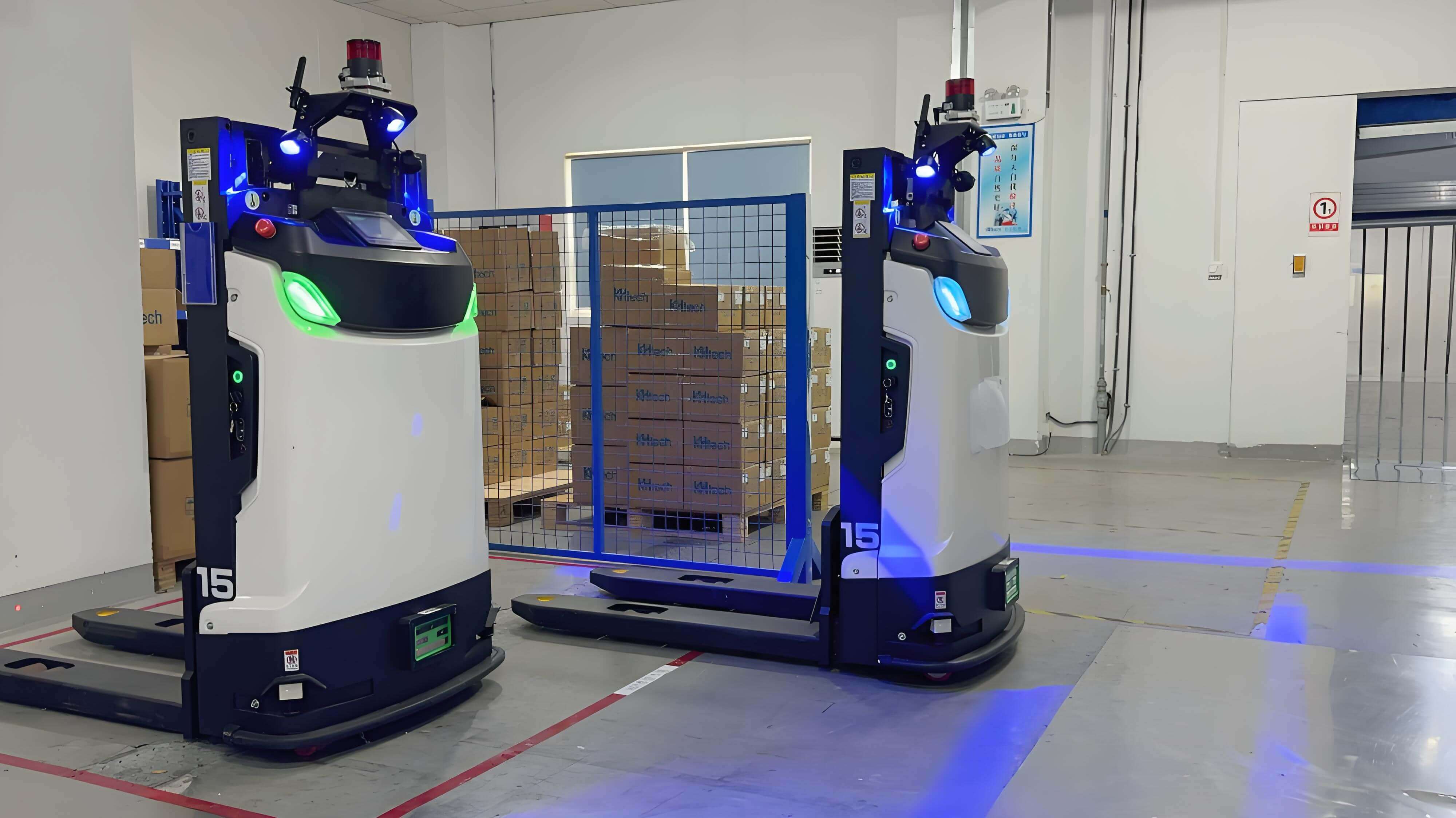
Industrial automation has revolutionised how businesses manage production and internal logistics. Today, thanks to advanced technologies, internal logistics has become a key factor in enhancing the efficiency of warehouses and production facilities, reducing costs, and improving safety.
As a Chief Executive Officer or senior executive, you understand the importance of streamlining operational processes through internal logistics automation to create efficient distribution centres. You are perpetually seeking ways to boost productivity and meet customer demands. Automation is one tool to help you achieve these objectives, though you may be uncertain how introducing automated solutions can refine your internal logistics processes. In this blog post, we explore the definition and core value of internal logistics automation, as well as how automated solutions can significantly enhance internal logistics efficiency and throughput capacity, helping you initiate automation processes within your warehouse.
What is Internal Logistics Automation?
Internal logistics refers to the entire process flow of materials within an enterprise, encompassing receipt, storage, production, distribution, and dispatch from the warehouse.
Internal logistics automation involves the automated execution and unified coordination of material handling, warehousing operations, and production supply through unmanned forklifts, AGVs/AMRs, and digital dispatch systems. This achieves enhanced efficiency, accuracy, and safety.
An efficient internal logistics system can achieve the following objectives:
- Reduce material handling time.
- Enhance order management accuracy.
- Minimise waste and losses.
- Improve workplace safety.
- Reduce reliance on labour while optimising human resource allocation.
- Integrate artificial intelligence-based solutions to achieve continuous improvement.
The driving force behind internal logistics development stems from enterprises' need to enhance competitiveness by reducing waste and improving workflow management.
How does AiTEN Robotics Enhance Efficiency Through Internal Logistics Automation?
1. Automated Forklift Trucks Replacing Manual Handling
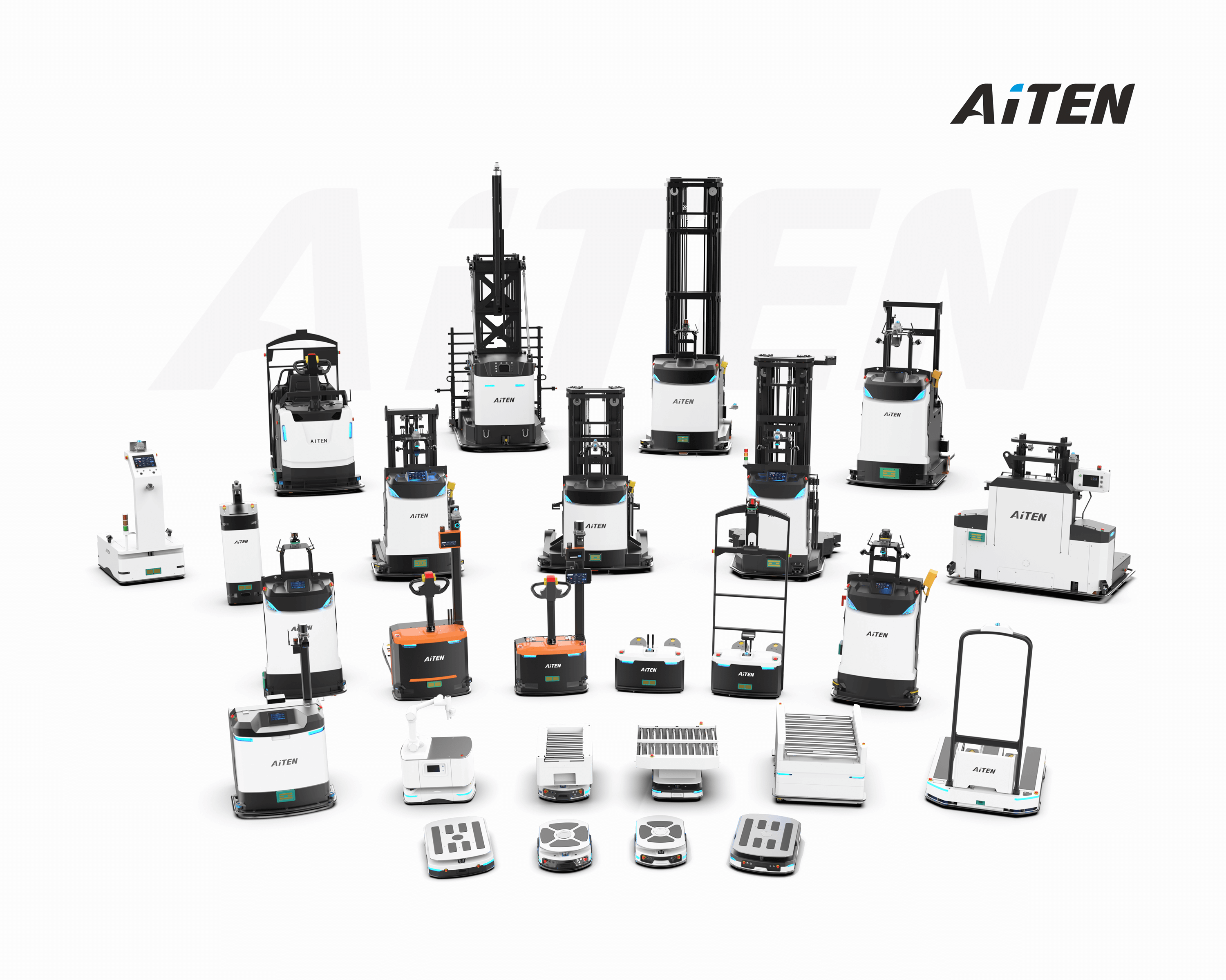
AiTEN automated forklift trucks can autonomously perform:
- Pallet storage and retrieval
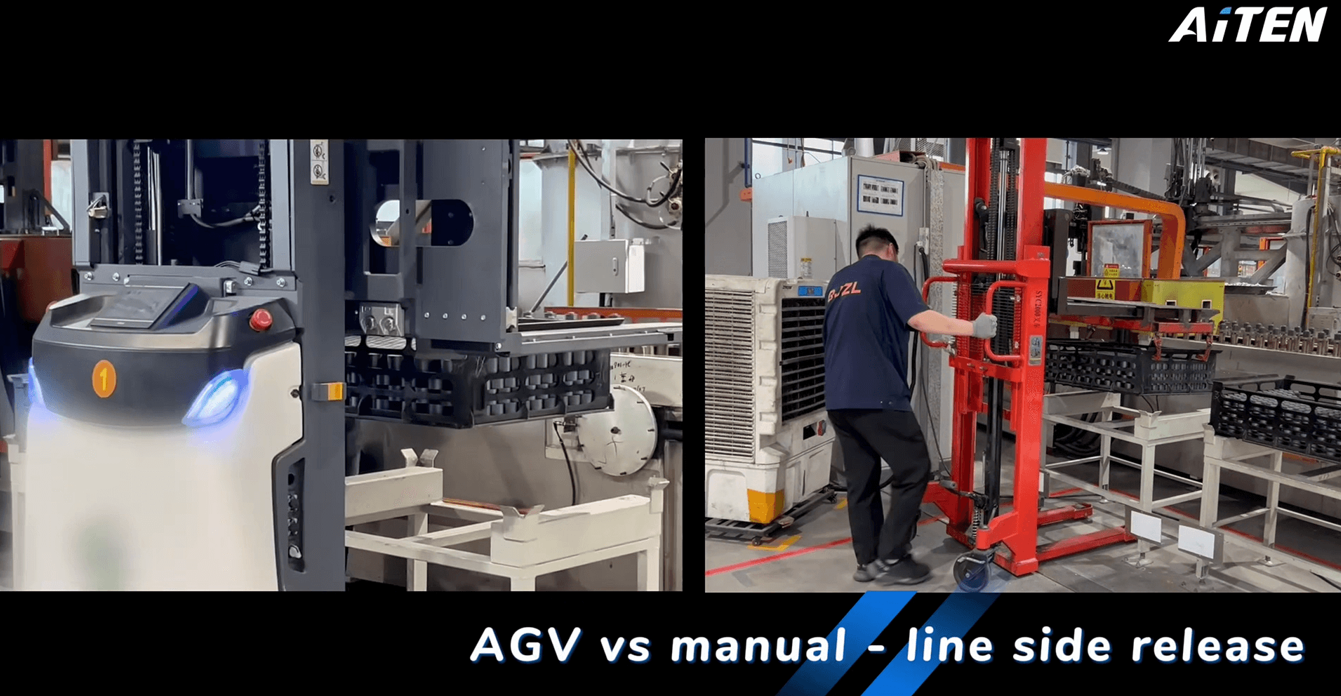
- Production line-side distribution
- Cross-warehouse material transfer
- High-bay racking operations
Operating under system instructions, these robots deliver consistent operational efficiency with minimal error, eliminating uncertainties inherent in human operation.
2. Full-Process Scheduling
Automated Guided Vehicles (AGVs) are autonomous vehicles that can navigate pre-programmed routes within warehouses and factories. They are ideally suited for environments characterised by repetitive operations and clearly defined layouts.
Autonomous Mobile Robots (AMRs) represent a more advanced technological evolution, utilising intelligent sensors, machine vision, and artificial intelligence to navigate autonomously, avoid obstacles, and optimise material transport routes.
The combined use of AGVs and AMRs enhances operational efficiency and reduces the risk of human error. Furthermore, these systems are scalable and can be readily integrated into existing industrial environments, thereby minimising the need for significant structural modifications.
Through its proprietary scheduling system, AiTEN Robotics will:
- Unmanned Forklift Trucks
- AGV / AMR
- WMS / MES / ERP
Unify scheduling and data connectivity, enabling the coordinated flow of materials, equipment and information.
3. Reducing reliance on manual labour to free up high-value roles
By delegating repetitive, high-intensity handling tasks to robots, enterprises can redirect personnel towards quality management, production oversight, system maintenance and optimisation, thereby significantly enhancing overall workforce efficiency.
Recommendations for Implementing Internal Logistics Automation
When upgrading internal logistics automation, enterprises should scientifically plan according to their specific requirements to avoid indiscriminate investment.
- Focus on core bottleneck scenarios (e.g., line-side delivery, inbound/outbound warehousing)
- Define clear efficiency, throughput, and ROI targets
- Select replicable, scalable unmanned forklift solutions
- Achieve deep integration with existing WMS/MES systems
- Progressively upgrade from ‘point automation’ to ‘system automation’
How to integrate autonomous forklifts in warehouse operations
總結
The demand to reduce labour costs and enhance efficiency has spurred rapid development in internal logistics automation. Warehouse staff turnover remains persistently high, with millions of vacancies projected to persist through 2030.
Automation technology can help existing staff work more efficiently while making their tasks less monotonous, safer, and more appealing. All of this contributes to attracting new employees.
Automating internal logistics is not merely a trend but a necessity for businesses to remain competitive in an increasingly challenging market. Companies investing in these solutions can enhance productivity, efficiency, and safety. If you wish to optimise your company's internal logistics and elevate it to a new level.
Through AiTEN Robotics' driverless forklifts and comprehensive solutions, enterprises can significantly boost efficiency and throughput while ensuring safety, thereby establishing a future-proof intelligent internal logistics system.
Should you be ready to commence an initial assessment, please contact us to schedule a meeting with an AiTEN Robotics automation specialist.